


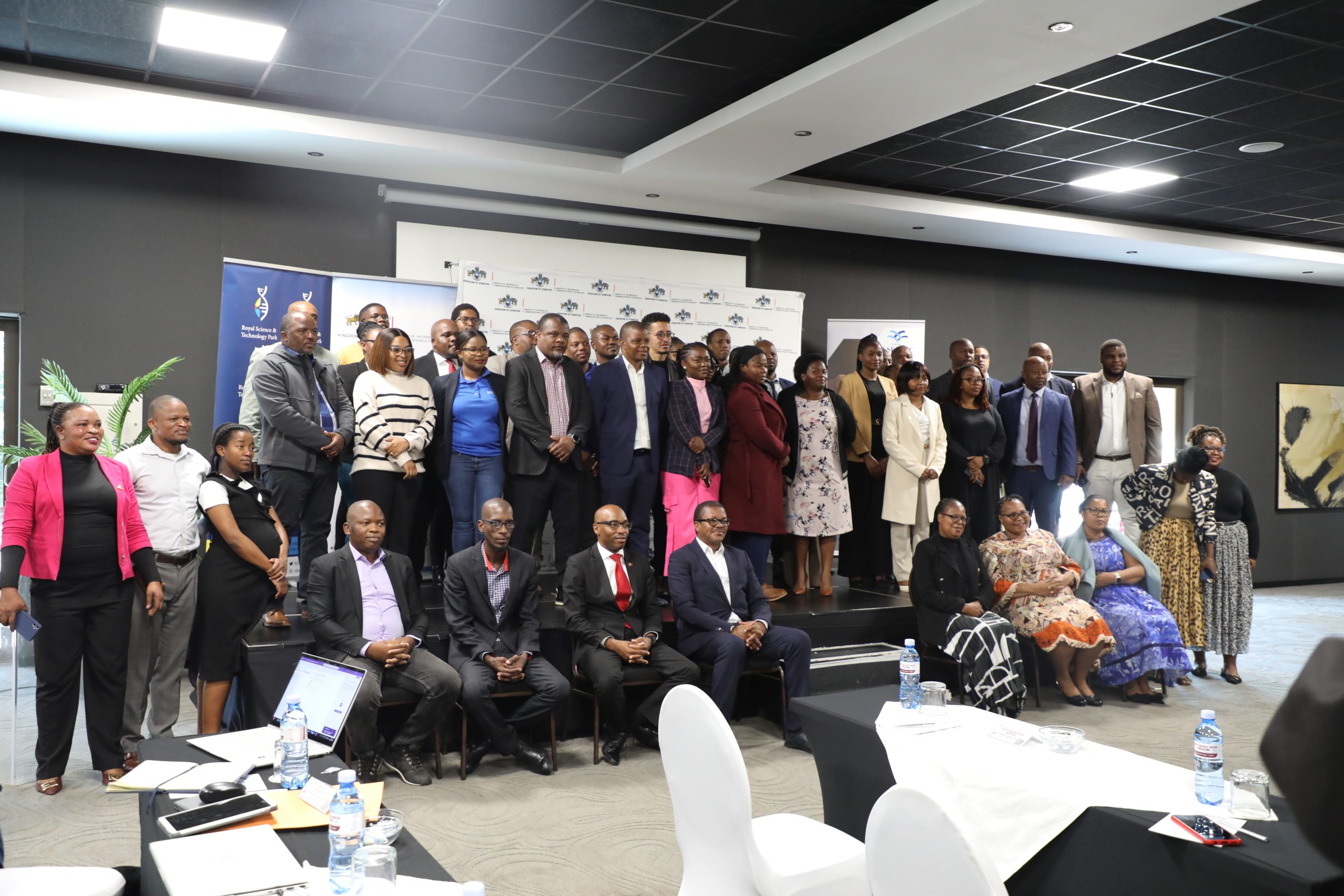
On Tuesday, 13 May 2025, the Ministry of Information, Communication and Technology (ICT), in collaboration with the Eswatini Economic Policy Analysis and Research Centre (ESEPARC), convened a national consultative workshop to develop a regulatory framework for the Royal Science and Technology Park (RSTP). Held at the Happy Valley Hotel in Ezulwini, the workshop brought together stakeholders from government, academia, and industry, demonstrating the country’s dedication to establishing a robust, enabling environment for innovation, entrepreneurship, and technological advancement.
In her welcoming address, Dr. Maseko from the Ministry of ICT (RSTI) reflected on the transformative journey that began in 2019 and led to the successful review and enactment of the RSTP Act of 2023. She emphasised the need for comprehensive regulations to support the full operationalisation of the park and position it as Eswatini’s premier hub for science, innovation, and technology. Dr. Maseko also acknowledged the migration of Government Computer Systems (GCS) to RSTP, underscoring the urgency of establishing clear service management protocols. She urged stakeholders to consider that regulations must be enabling not restrictive, to stimulate innovation and sustainable national development.
Speaking on behalf of the Principal Secretary from the Ministry of ICT, Mr. Manqoba Msibi, Substantive Director of the National Archives, welcomed stakeholders and emphasised that the Royal Science and Technology Park (RSTP) is not merely a physical infrastructure project, but a strategic investment in the country’s digital future, one that supports local entrepreneurs, fosters innovation, and contributes to the achievement of the sustainable development goals. He outlined the park’s alignment with the SADC Industrialisation Strategy and the 2018 Special Economic Zones (SEZ) initiative, emphasising the role of the RSTP in fostering collaboration between government, academia, and industry.
The PS highlighted key focus areas for the regulations, including:
- Addressing critical infrastructure needs
- Intellectual Property Rights
- Licensing procedures
- Attraction of foreign investment while protecting local interests
He called for inclusive participation, urging stakeholders to be prudent and constructive in shaping a regulation that balances accountability, growth, and sustainability. “We are taking the first step toward building a digital future for Eswatini, let’s ensure the foundation we lay is strong, collaborative, and future-oriented.”
Dr. Thabo Sacolo, Executive Director of ESEPARC, thanked stakeholders for their presence and reaffirmed the Centre’s commitment to collaborative, evidence-based policy development. He emphasised that ESEPARC’s role extends beyond drafting regulations; it involves rigorous research, stakeholder engagement, and stress-testing of proposed frameworks.
“We do not presume to have all the answers. Your lived experiences, sector-specific expertise, and day-to-day interactions with real challenges provide invaluable insights that make our research credible, relevant, and impactful,” he said.
Dr. Sacolo outlined the objective of the workshop: to present preliminary findings from stakeholder consultations, solicit further input, identify gaps or regulatory challenges, and gather actionable proposals that will shape the draft regulations.
He stressed the importance of open dialogue, objective feedback, and shared commitment: “This process is about shaping the kind of regulatory environment that will allow RSTP to be a driving force behind Eswatini’s transformation and competitiveness in the 4th and 5th Industrial Revolutions.”
The stakeholder contributions gathered in the workshop will inform the development of the RSTP regulations to ensure its operational and strategic success.
